Borderlands
This poem by Hayley Elliott-Ryan was shortlisted for the Right Now Poetry Competition, judged by Maxine Beneba-Clarke, Amanda Anastasi and Benjamin Solah.
This poem by Hayley Elliott-Ryan was shortlisted for the Right Now Poetry Competition, judged by Maxine Beneba-Clarke, Amanda Anastasi and Benjamin Solah.

Maya Borom visits the Melbourne Museum’s Bunjilaka Aboriginal Cultural Centre that provides a wondrous, educational and hands-on experience of Indigenous cultural heritage.

Australia Day sparked interesting, if familiar, debates in the media, which this year showed signs of extending its focus around the occasion, writes Pia White.
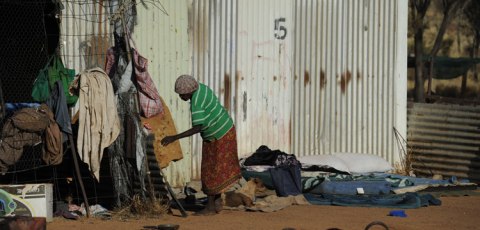
Must-see documentary, Utopia, is a damning account of successive Australian governments’ failure to address apartheid-style treatment of Indigenous communities, writes Maya Borom.
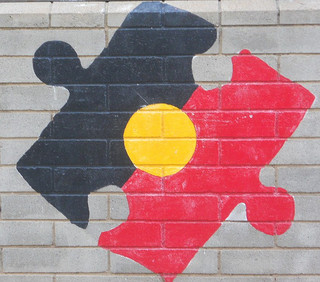
At the time of European settlement, around 250 Indigenous languages were spoken in Australia. Just 200 years later, it is estimated only 20 are widely spoken. Allison Worrall investigates the role of education in maintaining and revitalising Indigenous languages.

Last month, Right Now focused on rights issues and cultural shifts. Here, Right Now’s editorial team present 10 landmark cases that arguably shifted how rights are protected in Australia.

When it comes to significant shifts in culture, law and society are poised in an agonising “chicken or egg” scenario. Does the law change from above, trickling down to alter a culture? Or does a movement rise up, demand, fight, lobby for a change to which the law eventually concedes? It’s a dynamic relationship that doesn’t obey a strict rule of cause and effect.
Pia White looks at media coverage of human rights during October through the monthly theme of ‘institutions’, and Sam Ryan reviews ‘Child Soldier’, the new song from hip-hop duo (and refugees from Burundi) featuring Paul Kelly.
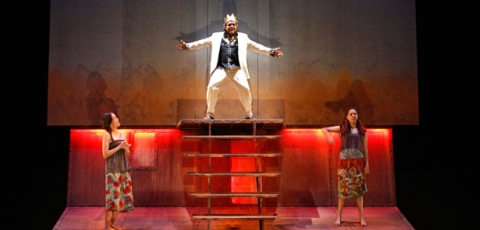
Evelyn Tadros and Imogen White review two powerful Indigenous works: The Shadow King, a quintessentially Australian take on King Lear; and Vic Simms’ riveting re-released 1973 album, The Loner.

I heard myself confusing tenses – intentionally – saw that I was trying to simplify the message – to speak her language – failing miserably. I hadn’t even asked what her language was. Even if I did I knew I didn’t speak it.

Sonia Nair reviews John Bartlett’s second novel Estuary, which explores the chasms of the modern Australian character through themes such as indigenous rights, mental health, sexuality and disability.

We must strive for gender parity in society if we are to abolish gender-based violence in the home.