
The Rudd/Abbott Refugee Revolution
Spencer Zifcak explains why Australia’s asylum seeker policy misses the scale of the global refugee tragedy, disregarding both the humanity of asylum seekers and Australia’s international responsibility.
Spencer Zifcak explains why Australia’s asylum seeker policy misses the scale of the global refugee tragedy, disregarding both the humanity of asylum seekers and Australia’s international responsibility.

Assisted reproductive technologies (ART) have challenged our thinking around what it means to be human. Kate Galloway asks, ‘What do they mean for human rights?’
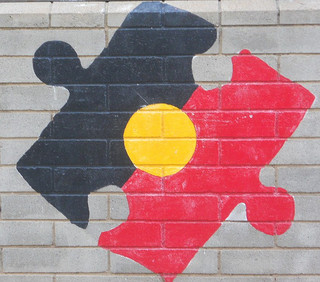
At the time of European settlement, around 250 Indigenous languages were spoken in Australia. Just 200 years later, it is estimated only 20 are widely spoken. Allison Worrall investigates the role of education in maintaining and revitalising Indigenous languages.

With arbitrary detention repeatedly used despite being repeatedly condemned by the international community on human rights grounds, Alexander Reilly and Justine Stefanelli suggest a different approach.

Hsin-Yi Lo explains why online activism cannot replace wider participation, engagement with the public and sacrifice to bring about social and political change.
Lyndal Rowlands explains the how and why of the ghettoisation of voices online, and the need for an inclusive cyberculture.

Michael Green tells the story of how a group of young African-Australians set about challenging institutional racism at Victoria Police.

In recent times, Victoria Police have faced multiple allegations of institutional racism. Sara Maher looks at Victoria Police’s response, and the effectiveness of community engagement.

Are “security” concerns enough to justify the Federal Government’s lack of transparency over asylum seekers? Marika Sosnowski looks at innovative decisions by the Israeli High Court that attempt to balance security and human rights as possible leads for Australia.
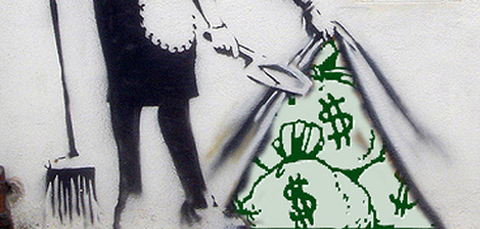
The Australian Government and education providers make a nice profit from international students, but fail to protect them from being exploited in the workplace, writes Alexandra Hurley.