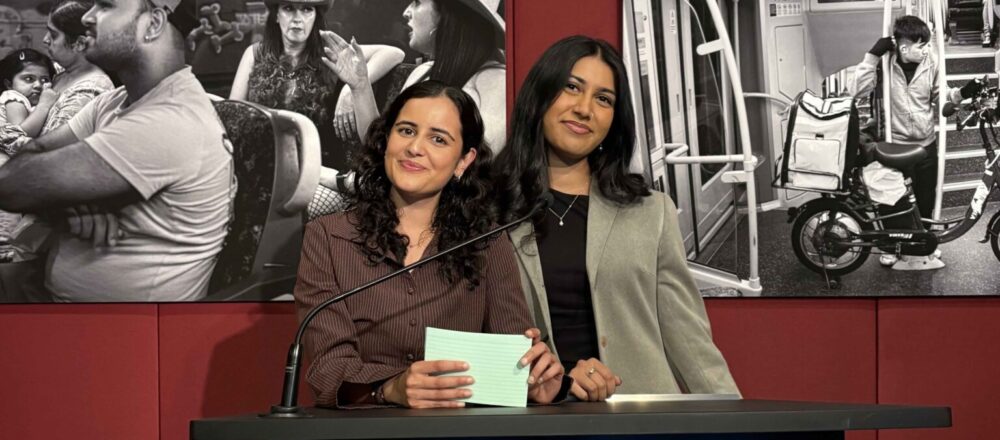
The G20 Youth Summit (aka Y20) brings young professionals together to discuss the state of the world and its globalised challenges. After a week of negotiations, the delegates produce a communique to propose a set of policy recommendations to the G20 leaders. As a 2026 negotiator in the Australian team, it has been a privilege and a steep learning curve as I immerse myself in the processes and bureaucracy of international diplomacy.
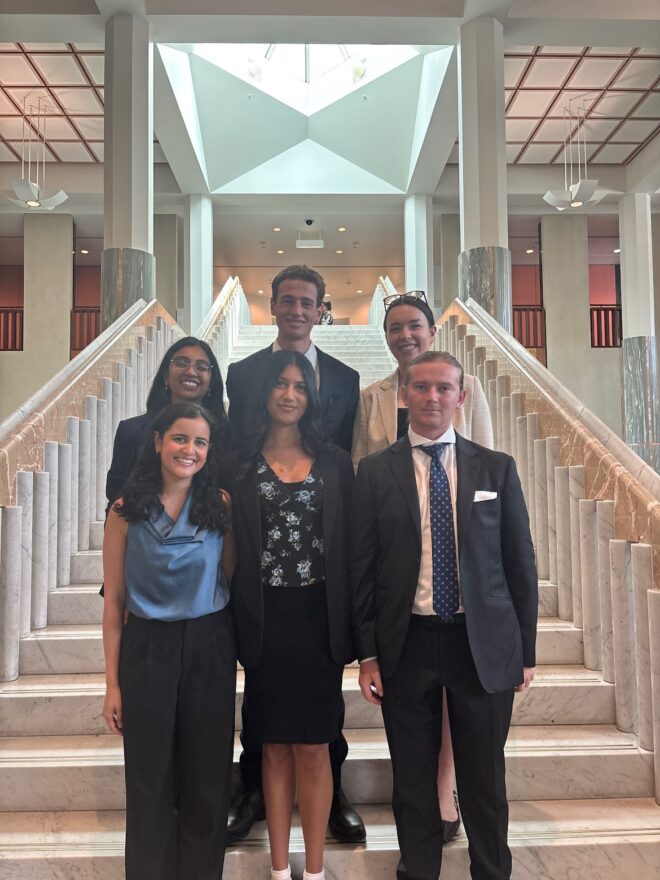
In December 2025, five of us were chosen to represent Australia from a round of national applications. Earlier this year, we were sent to Canberra to meet with and learn from policymakers, MPs, DFAT and the G20 Sherpa team. Each one of us is responsible for negotiating a specific track: Global Economy, Fragility and Conflict, AI & Digital Innovation, Food Security and Energy. Once given our track, where I was assigned to the Global Economy and Job Creation track, we began the process of defining the priorities of Australian youth in each area.
Part of the Y20 role involves youth consultation, and we used surveys and interviews to collect the perspectives of what young people wanted to see change in the global economy and job creation systems. One of my highlights included speaking with Rebecca Mullins, the CEO of My Foundation Youth Housing in Australia. We spoke about how Australia treats housing as an asset class instead of a human right and how our tax settings and housing processes are conducive to that. To reframe affordable housing as a human right, Rebecca spoke about the power of young people’s vote, changing tax and international wealth transfer policies, building more housing as well as utilising existing properties for meanwhile use. This shaped one of the key priorities I am bringing to the Y20. Namely, eliminating exclusionary zoning policies across all G20 countries.
My second priority looks at the rise of AI in the gig economy, particularly in online platforms. AI adoption has risen by 40% since 2021 and 55.8% of young people in Australia earn some or all their income through digital labour platforms. To protect the rights and conditions of young people in the gig economy, I am researching policies on a human-to-human connection for dismissal processes, minimum pay and overtime pay for gig workers as well as enabling social benefits to follow workers across different labour platforms. I hope to advocate for a coordinated approach to AI’s use in digital labour platforms across all G20 countries and to put the rights of the worker at the centre of my policies.
So far, the Australian team have met other Y20 delegates from all around the world and had three online negotiations, starting at 10pm and ending at 12am due to the time differences! In these sessions we will break down our track and discuss specific policies we would like addressed in the communique. Having this process ensures that we work efficiently when we get to Washington DC and it has been a great experience to get to know other young people from around the world who are passionate about the same things I am.
One of my key takeaways so far has been the learning about Australia’s reputation as a collaborative, easy-going and productive country. I have found it enjoyable to build coalitions and form alliances on certain policies, and offering Caramelo Koalas or sweet treats becomes an official method known as Tim Tam diplomacy!
The fellowship also requires each delegate to develop a domestic policy proposal, which is published in the Global Voices Journal and read by politicians, policymakers and the public. We work with editors and policy managers over six months to ensure that our proposal is viable and detailed. For this component, my focus is on climate displacement in the Indo-Pacific. Currently, international law lacks a universal definition for climate refugees. Policy addressing climate migration remains fragmented and unsupported. My proposal aims to establish a legal foundation and migration pathway for vulnerable Indo-Pacific populations who are at risk of permanent displacement from the effects of climate change.
I will be leaving shortly for my duties in Washington and am very excited to report back on what the outcomes of the 2026 G20 Youth Summit are and what I learn in the process.