Note: the following opinion piece was written by a member of the Australian Jewish community who was not present at the Bondi terrorist attack. She does not claim to represent the views of the victims, nor represent the whole Australian Jewish community.
I didn’t reach for my phone as easily on Monday morning. Instead, I let my alarm ring out, dreading what might have transpired during my fitful night’s sleep. Judaism teaches us that every life is a universe, and as calls and texts went unanswered I carried the fear of another shattered universe.
By now, most Australians will know that on the evening of December 14, the first day of Chanukah, a mass shooting was committed at Bondi Beach, an act now declared an antisemitic terrorist attack. Chanukah is an eight-day Jewish festival of light and hope in dark times, and the tragedy of this is not lost on any of us.
For decades, Bondi has been home to the Jewish community. Wentworth is Australia’s most Jewish electorate. Having grown up there, Bondi conjures up deeply Jewish memories for me: my bat mitzvah at the Bondi Pavilion, my favourite bagels at Wellington Cake Shop and nights spent with family at the Hakoah club, a beloved Jewish community centre. It reminds me of my Jewish grandmother Leone and Holocaust survivor grandfather Tom, who I am relieved were not alive to see Sunday.
I am heartbroken for Australia, and particularly for Sydney’s Jewish community. It is horrifying that people can be driven to this level of dehumanisation, and I fear for what this means for the rise of antisemitism on the whole.
As a member of the victim community in a crisis, you never know who will extend their support. Loved ones from fellow marginalised communities are often the first to reach out, and for me on Monday, this included new Palestinian friends. Due to the systemic separation of our communities, I made my first Palestinian friends in recent years. But their reaching out reminded me of how important it is to forge connections with one another – crucial in fortifying all Australian communities against hatred. I am grateful for the outpouring of support the Jewish community has received from across not just Australia, but the world.
Having grown up there, Bondi conjures up deeply Jewish memories for me: my bat mitzvah at the Bondi Pavilion, my favourite bagels at Wellington Cake Shop and nights spent with family at the Hakoah club, a beloved Jewish community centre.
At this time, people from across the political spectrum will try and weaponise our grief. And while I run the risk of being accused of the same, I write this to acknowledge that Sunday will make the collective pursuit of justice even harder. Although the investigation into this antisemitic terrorist attack is in its early stages, Australia’s Antisemitism Envoy Jillian Segal has tried to connect it to Sydney’s March for Humanity in August. But insofar as she pedals this divisive rhetoric, neglecting to acknowledge the full context of antisemitism (including that of white nationalist groups who held an antisemitic rally outside of NSW Parliament last month), Jewish safety continues to be compromised.
My Jewish friends and I have encountered Segal’s sentiment in our personal lives. As members of the Jewish community who are involved in the Palestine solidarity movement, we have received messages from Jewish loved ones to the effect of, “acknowledge your role in all of this” (our perceived “role” being our activism). As if we have blood on our hands, as if our hearts do not bleed the same, as if we are not also Jewish and grieving.
But as prominent Palestinian-Australian leader Nasser Mashni said, “the movement for Palestine is against all forms of hate, however that hate manifests itself … the vile actions of yesterday have nothing to do with the world we are trying to build, the world we dream of. A world where we are all equal, all precious, all valued [and] afforded the dignity and respect we each deserve.” A vision aligned with Jewish values of tzedek (justice) and Tikkun Olam (healing the world).
To my Jewish community: strength will not be found in blaming our own or our neighbours, but rather coming together. We saw this during Monday night’s heartwarming Healing Ceremony put on by Bundjalung lawyer, author and advocate for human rights Nessa Turnbull-Roberts and fellow Aboriginal leaders. Where Rabbi Kamins, my rabbi, and Bilal Rauf, special advisor at the Australian National Imams Council were pictured embracing, a touching moment now doing the rounds on social media.
With this in mind, I beg of the Australian community: now is not an opportunity for more racism. In the aftermath of terrorism, People of Colour are too often scapegoated and made the victims of further violence.
For Jews of Colour like myself, this is complicated – we face the double-edged sword of antisemitism and racism, each often coming from different directions, adding alienation onto what is already so painful.
Nor can we allow Islamophobia, such as the vile Islamaphobic act of intimidation in Narellan. We must resist those who attempt to pit Islam and Judaism against each other. Isaac and Ishmael were brothers; we are cousins. For centuries we have held each other and must continue to do so now. Just like Syrian-Australian bystander Ahmed al Ahmed, a Muslim man who risked his own life to protect Sunday’s victims and to whom I express my best wishes for his recovery.
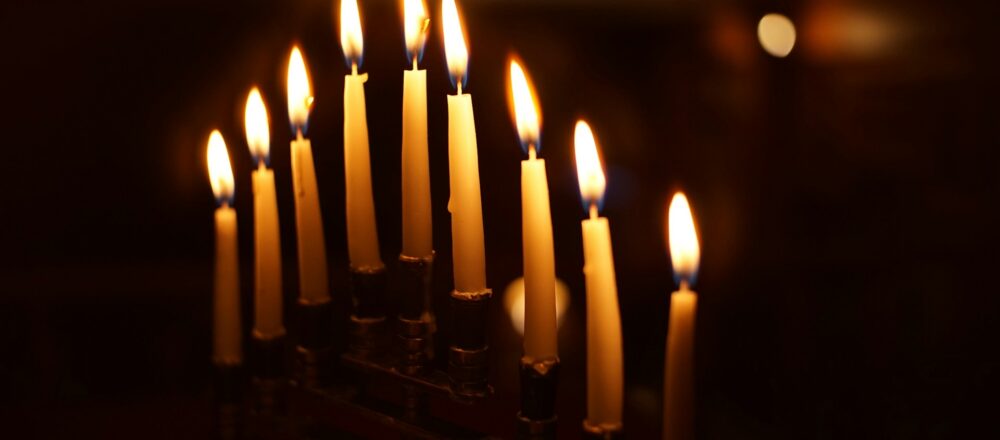
Though this year’s Chanukah is stained with grief, the Jewish community will not let go of light and hope. As we light our candles, my heart goes out to all those affected: the Jewish community, Sydneysiders, Arab and Muslim communities and allies. In particular, as is custom in Judaism, I wish long lives to the families of all those whose lives were so unfairly stolen from them.
May their memories be a blessing.