January 26 is typically a day full of heated debate and this year was no different. What some Australians are intent on celebrating, others mourn and protest.
Gadigal/Sydney saw a crowd of at least 18,000 people take to Hyde Park and to the streets of the CBD to join the Invasion Day rally. The organisers of Blak Caucus, including Dunghutti man and activist Paul Silva, aim to shed light on the reality of what life is like for First Nations People in Australia due to the lasting legacy of European invasion. Over policing, destruction of sacred land, intergenerational trauma, deaths in custody, and forced child removals are just some of the issues impacting the world’s oldest continuous living culture still in 2026.
For Blak Caucus, many First Nations People and their allies, January 26 is not a day for celebration. It is a day for mourning, reflection and resistance.
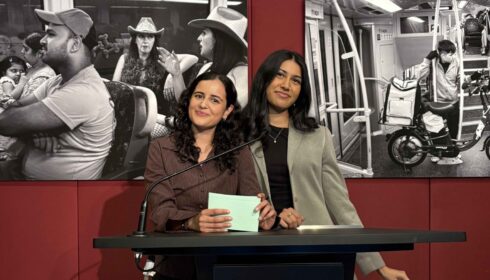
Lani Andrews, a Torres Strait Islander woman from Saibai with ties to Biripi Country, understands the reality of being a Blak person in White Australia all too well. Andrews has long had a history of attending and speaking at rallies calling for Blak voices to be amplified, and for non-Indigenous Australians to face the reality of the dark past this country possesses, a past that continues to marginalise Indigenous communities.
For Andrews, January 26 is about joining together to represent the survival of First Nations People. “65,000 years on, we are still fighting and still strong in our connection to each other, the land, and the water”, she said to Right Now.
After the murder of George Floyd, an African American man who died at the hands of police, while in their custody, the prominent BLM movement became global. National protests took place across Australia in June 2020, with heavy police presence, a global pandemic at play, but also a strong spirit unifying the experience of Black and Blak relationships with the police across continents.
After the local rallies quieted down Andrews herself stepped back from attending, and from speaking out on social media all together. She says this was due to the overwhelming amount of racism in her comment sections and messages across social media platforms.
It was only recently that Andrews returned to her advocacy work, using her feet to march and her voice to speak to agitate discussions around a topic that is not only close to her heart, but that is a part of her everyday experience as a Blak woman in White Australia.
When I asked her why she returned, Andrews made it clear. “I should never be silenced by these people”.
“I didn’t go through everything I went through just to give up because some loser on the internet said they would shoot me where I stand”, she says
For Andrews, the decision to come back was grounded in something bigger than any amount of hate she’s received. “I returned because the message is important, showing up for myself, my family, and our people is important”.
This January 26, Andrews was one of thousands who marched. But Invasion Day rally goers were not alone. March for Australia protesters also walked Sydney’s streets, making a crowd of about 2000 people, draped in Australian flags, some inciting hate speech and one arrested for antisemitic comments.
Despite 1500 police on horses, bikes, on foot and in the air, the protesters clashed. This led to a moment where Andrews took the flag of a March for Australia protest goer.
When I asked Andrews what was going through her head at that moment, she told me that she felt scared, but not of the man she took the flag from. She was scared of the riot squad chasing behind her. “Honestly, I did feel scared … thinking about what could potentially happen to me as a Blak person.”
Before the day drew to a close these images were published on social media. But despite thousands of likes, hundreds of shares, reposts, and comments of support, there was also an onslaught of hate, including death threats – something Andrews, Silva, and other Indigenous activists are well acquainted with.
This time though the threats were targeted, including a stream of messages from a few nameless, anonymous social media users who said they were going to take Andrews’ life away – that they would end her life because of her decision to steal an Australian flag. One user threatened both Andrews and Silva saying they, among others prominent in the activist space, are on a “hit list”.
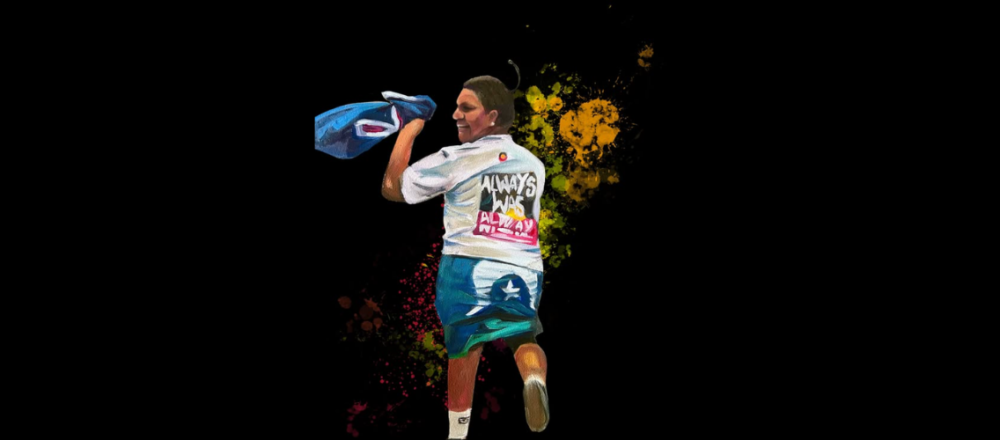
Brandi Salmon, a Wiradjuri and Tongan artist, based in Lutruwita/Tasmania, was inspired by Andrew’s bravery which prompted her to recreate the image in an oil on canvas piece. Salmon spoke to Right Now about the collective experience of racism faced by Indigenous people nationally and how this has intensified in recent years through both in-person and online abuse.
“Seeing that photo of Lani, myself as a young Blak woman, made me giggle, made me laugh, and reminded me of the resilience of Aboriginal and Torres Strait Islander people,” she said. “We continue to thrive and resist.”
Andrews says she was honoured to be a part of Salmon’s work. “The piece is a symbol of the strength we have to show others”, she said.
“Blak joy is possible, even on heavy days such as January 26”.